July 18, 2019
Rashmi and Lily’s perspective:
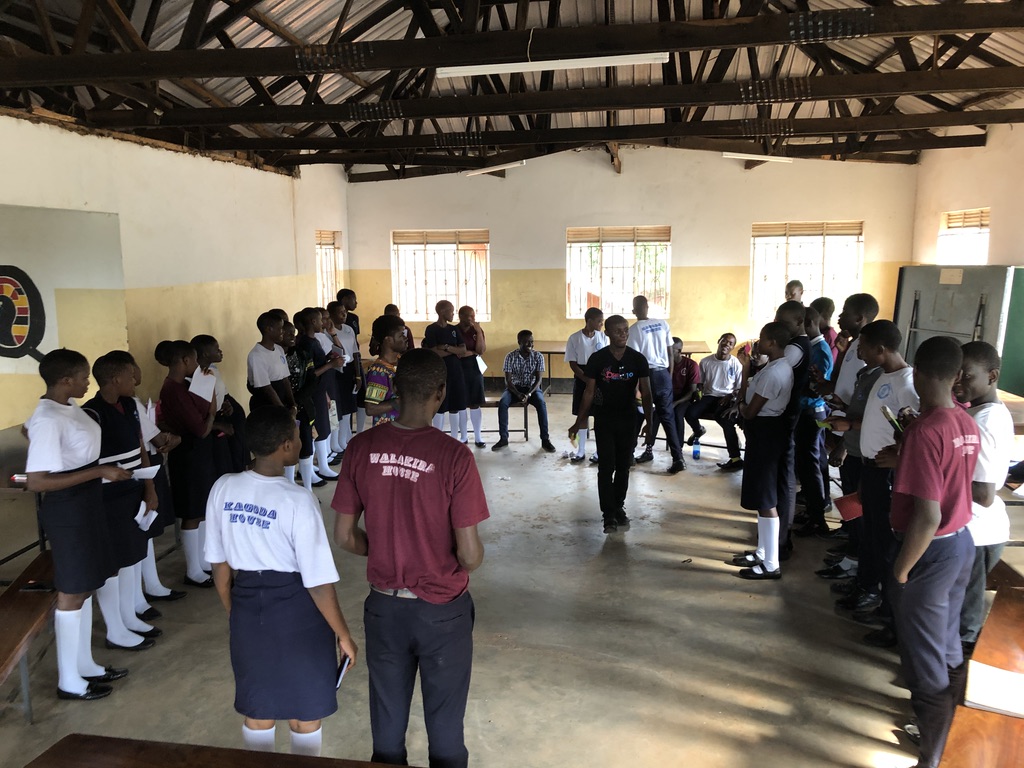
This morning, we arrived at work a little earlier than normal, around 8:15am, in preparation for the Miss Uganda peer educating session that we were attending and helping to facilitate. Rashmi and Lily, along with Ibrah, Erin, and Desire, drove to the Miss Uganda boot camp training facility and met with all of the pageant contestants. The girls were so sweet and excited for us to be there, the woman who supervises and coordinates their boot camp mentioned that the RAHU visit was her favorite part of the process.
To begin, we played a couple of ice breaker games, including the game of “Link” which we often play in Globemed meetings. The game revolves around the idea that we are all linked to each other in one way or another and that no matter how alone you might feel in your experience, there is always someone else going through something similar. After playing link, we went outside as a group and did a little bit of pre-session reflection. Ibrah passed out notecards and asked everyone to write what their expectations for the session were, and what they hoped to offer or get out of the session as a whole. Most of the girls agreed that they wanted to be more educated on RAHU’s mission as a whole, and on the topics of female empowerment and contraceptives. After the reflection, Ibrah passed out cards to 8 of the girls there who volunteered for a privilege game. The cards had information on them about a specific person, such as their age, gender, occupation, marital status and number of children. The girls were lined up and then using the information on the cards, they were asked to take a step forward if they felt like they could do whatever the question was. For example, Ibrah would ask, “can you afford to feed your family three meals a day?” Someone who is a high ranking army general would take a step forward, but someone else who is an unemployed university student would stay stagnant. After all the questions were asked, Ibrah asked the girls to reveal who they were and why they had stepped forward or not for certain questions. One of the questions, “Do you have to ask your spouse for permission when spending money?” turned into a large group debate. It seemed like the group was mostly split in half, with some of the girls leaning towards the more traditional side, while others were more progressive in their views. The general consensus was that as a wife, finances should be shared with your husband because you are partners, but the idea of having to ask permission to use one’s own money created the divide. In this discussion, Ibrah also brought up the idea of equality and gender roles in Ugandan society. Even though traditionally, the man is the provider and head of the household, in 2019, there are many women who also hold jobs and provide just as much for their families. We made sure to emphasize female empowerment as well, stating that if the husband did not have to ask his working wife for permission to spend money, women should not put that expectation on themselves either.
After we wrapped up the privilege and equality debate, Ibrah spoke about the features on the SautiPlus app and how the resources available can be helpful for the girls. He mentioned the availability of articles and stories, the links to health centers in the area, and the anonymous chat feature, which is new. He pointed out how important it is, especially for young people, to have access to knowledgeable adults who can give them advice or direct them to a more specific resource to help them solve whatever problem they may have. The group seemed really excited about the wealth of information that RAHU has to offer young people, and how easily accessible it is.
After we went back inside, Humphrey arrived to talk to the group about RAHU’s history and his own personal life story. Rashmi and Lily were shocked to find out that Humphrey is only turning 31 this year, which means he was just 22 when he founded RAHU! In his little speech, he made sure to make clear that the reason he has such a strong motivation to keep RAHU running and to make sure they are constantly implementing new projects is that he saw firsthand how the lack of SRHR resources in Uganda affected the youth. He seems especially passionate about the issue of HIV/AIDS and how little testing and drug treatments are offered outside of cities, if at all. Following Humphrey’s speech, the team reviewed methods of contraception with the girls, how each one differs, hormonal vs. non-hormonal, and the idea that not every method is right for every person. The methods included male and female condoms, the pill, Plan B, the implant, the shot, the IUD, and vasectomy and tubal ligation. The girls had a lot of questions about each method of birth control, and it was really rewarding to see how genuinely curious they were about what was available to them, and how we could help educate them a little further. After wrapping up a really educational and highly participatory session with the contestants of the Miss Uganda Pageant, we headed back to the office together.
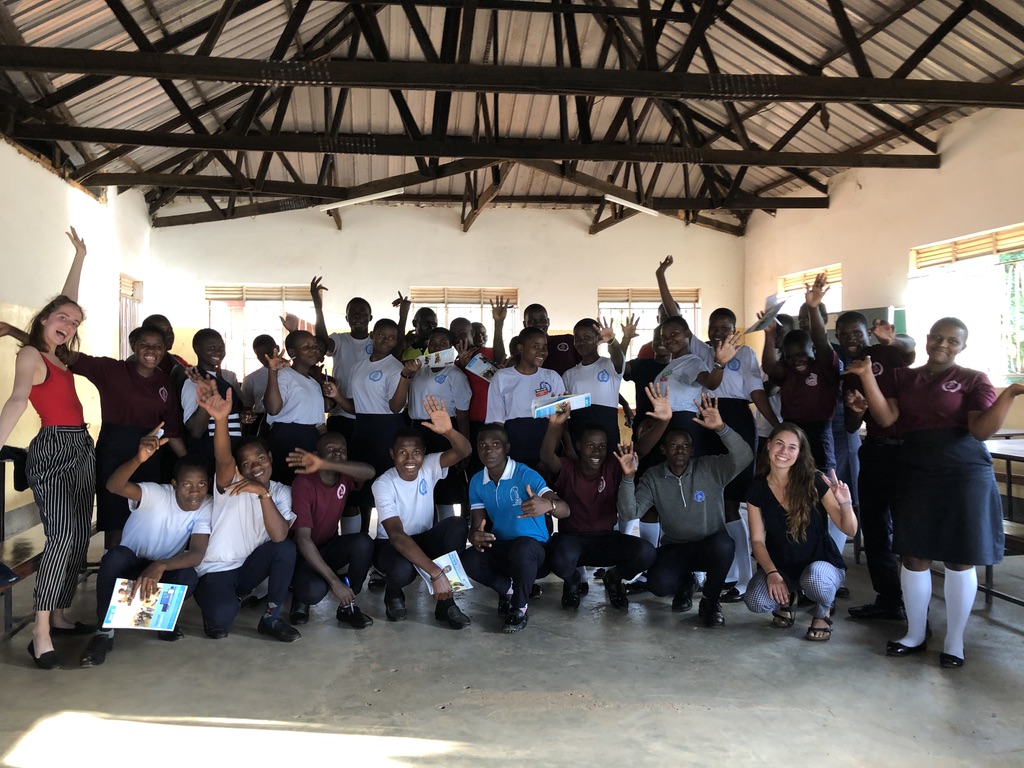
Upon arriving back at the office, we were alerted that we were expected to be attending a school outreach that afternoon with some peer educators who were facilitating sessions there. This was really short notice for all of us, but we happily piled back into the RAHU van and headed out to the two schools. Erin and Lily were assigned to a high school in rural Kampala and their session focused on peer influence/peer pressure. Rashmi and Desire went to a middle school nearby and focused on menstruation and personal hygiene. Both sessions involved participation from the students, various activities and games, and a question and answer portion at the end. After their session, Lily and Erin were lucky enough to get a tour of the school grounds, and spent some time talking to the head teacher who had set up the peer education session for the school.
After a long day of experiencing RAHU’s peer educators in action, and even taking part in the sessions ourselves, everyone was ready to crash as soon as they got back to the apartment. We had a quick dinner of fresh chapatis from the stand at the bottom of our road and called it a night.
Aayush and Mariam’s Perspective: Mbarara, Day 4
Location 1: Bugamba Health Center IV
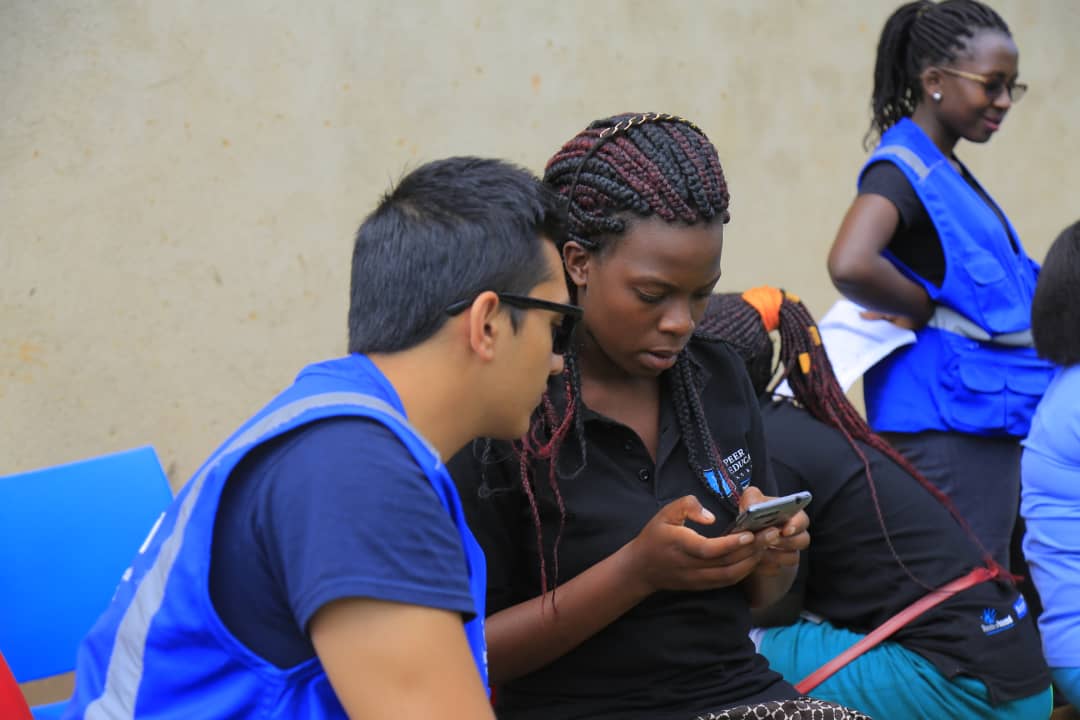
Similar to most of this week, we visited more health clinics to address any recent problems the peer educators had while also implementing technological upgrades. The meeting started off with a peer educator recap. A noticeable difference from other clinics were that the materials given by RAHU were leaving the youth corner. The lead peer educator stated he noticed peer educators borrowing them to take into the community but not returning them.
After all of the peer educators gave their recap, Jaliah asked about other issues facing the community including rape cases. Peer educators replied saying there were a few rape cases. In this situation, they would first provide emergency care at the clinic and then ask the patient if they wanted to go to the police to report it.
Next, Helen gave her report. She addressed the fact that none of the recaps stated exactly what went on during the month. “Did you do table talks, HIV, gender based violence, door to door visits, referrals, or drug abuse? Sexual reproductive health is broad, not just about condom use. Condoms are only a preventative measure to prevent HIV (abstinence is also a possible solution).” She also stated her disappointment in peer educators taking supplies. The games are meant to drawbacks kids to the youth corner and eventually learn about SRHR. “Out of 5 clinics, this is the first one that has problems within yourselves. I feel like we’ve moved backwards in the past couple of months. However, I know how you guys work so I know I won’t need to worry about you guys this month.”
In a casual talk about Uganda’s healthcare system, we learned that healthcare is free for everyone, however corruption runs big in smaller villages. Health care workers don’t get paid well by the government, so most ask for additional income to complete tests. In a life or death situation, most patients have no choice but to pay the additional fee.
Location 2: Nyaruhandagazi Health Center II
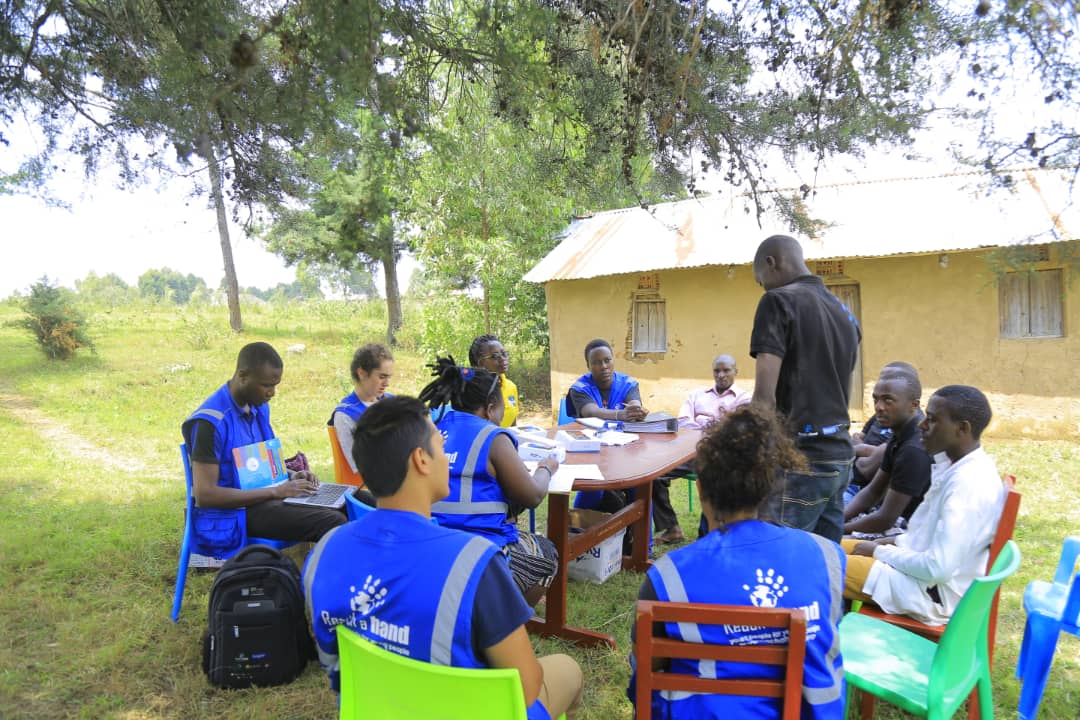
Here we encountered another location with only male peer educators. Helen knew a lot of the peer educators (and we find it amazing how she remembers all their names and the year they joined the program!) as well as commended them on their improved public speaking skills. One of the new peer educators explained, “Before I joined this company I was like other people. When I joined, they groomed me and I became a peer educator and I can now teach my peers and my community. We now feel that the company is really doing something.”
The nurses, being the only females, praised the peer educators for their work and explained that “We are part of them and they’re a part of us.”
The main concerns in this location included having to spend a lot of money on transport to the health clinic, since again it was in a mountain range. The other peculiar concern was lack of safety, as many times before, the health center was a target for thieves.
 Rutgers Globemed GROW Trip 2019