July 17, 2019
Lily and Rashmi’s perspective:
Derrick had us participate more in the planning and brainstorming for this year’s IGD conference. Although the topic was already agreed upon (teen pregnancy), he asked us to think of some subtopics so we continued our conversation on how were going plan the Inter-Generational Dialogue for this year. Some subtopics we were thinking about including under the main topic of teenage pregnancies and the societal implications of restricted SRHR are education reform, access to healthcare, religion and culture and child marriages. When it comes to education reform were specifically referring to sexual health education reform in schools which can be hard to navigate because the national sexuality framework is very rigid. At most schools the ABC’s are taught and has been proven ineffective at reaching SRHR targets so maybe there needs to be a separate teacher for SRH or teachers and nurses that are certified in that field. We can do this by training teachers and headmasters so they become ambassadors for SRHR in schools and can effectively lobby to policy makers while at the same time ensuring school clinics are full of information and resources for students. The second topic is access to healthcare, more specifically addressing geographical gaps and disparities. A way to solve this issue is to ensure more rural areas have nearby health clinics that are well equipped with and sanitary resources and ensuring medical professionals are better trained. The third topic is Religion and culture since these factors contribute to some existing public health issues. We would be focusing on how to culturally destigmatize SRHR and teen pregnancies. Some emphasis would have to be on allocating resources to rural areas and reaching out to adults and cultural leaders in rural areas. Another reason why the teen pregnancy rate is so high in Uganda is also due to a large child marriage rate which mostly occurs in rural areas largely due to the inability of the parents to raise the girl because of poverty so they sell her off to another family. The girl then becomes impregnated by her husband (who most of the time has HIV), she then becomes infected increasing the overall HIV/AIDS rate.
Lily and I started off by preparing for the SRHR session at the Miss Uganda bootcamp which will consist of ice breakers, female empowerment, gender roles, and various contraceptive methods. We had outlined most of what we planned on discussing and our first priority was creating an environment in which they felt comfortable enough to express their thoughts and feelings, so we decided to use the icebreaker “Link” that we learned from school. After icebreakers and introductions, we are planning to talk about a few statistics such as how many women are affected by Sexual Harrassment/Rape, how many women actually report these incidents, how many women become unexpectedly pregnant and how often Gender-Based Violence Occurs. Then we will open the floor to discussion. For example, asking, “Does anyone have a guess as to the percentage of women in Uganda who have had to deal with sexual harrassment, assault, or rape?” Give them time to discuss and come up with an answer, and then use that answer to bridge the conversation and provide them with our information. Female empowerment is also a very large overarching topic that we would like to address by talking about consent. How to say no, respecting your body and ownership of your body and Self-defense and how to protect yourself. The other side of consent is when you say yes, by talking about that we hope to destigmatize female sexuality as a whole as well as discuss the emotional toll of pregnancy and how not to feel shame or guilt. We would like to end by asking the ladies what it means to them to be apart of this pageant and how they think embracing who they are and where they come from empowers them personally. Then finally having an open dialogue conversation in which members can share what they are feeling or ask questions or make comments etc.
Towards the end of the day, another intern here, Elizabeth, who works for planned parenthood in Tennessee went over the various contraceptive methods such as female and male condoms, the pill and plan B, the injection, the implant, the IUD, tubal ligation and vasectomy.
Aayush and Mariam’s perspective: Mbarara, Day 3
Location 1: Kitojo Health Center II
Today we visited another health clinic named Kitojo Health Center II. Being a level II center, the clinic does not have the ability to perform all tests such as HIV and pregnancy testing. Some of the other challenges noted were
- lack of communication
- limited network for cell phones
- young people do not understand the complete need of condoms
- community does not respect the peer educators in this area
- transportation to and from health clinic
Despite these drawbacks, the clinic did have maternity and family planning abilities. During our visit, we saw numerous mothers with their babies waiting to be helped. Ziporah encouraged the peer educators by saying “if your community knows your value and what you are trying to achieve, you will be respected.”
Helen noted the gender imbalance with only 5 males and 0 female peer educators. She applauded the peer educators because out of the recent clinics we visited, they had the highest number of table talks completed. Helen so urged them to use the SautiPlus system to report their table talks and keep the numbers in their head: “Showcase what you have done because you really should be proud of it.” In terms of transportation, this health center has gotten so much better. In 2016, the RAHU van got stuck and staff had to walk. Reach a Hand does not have funding to work on roads and implement new programs, although it would be very helpful.
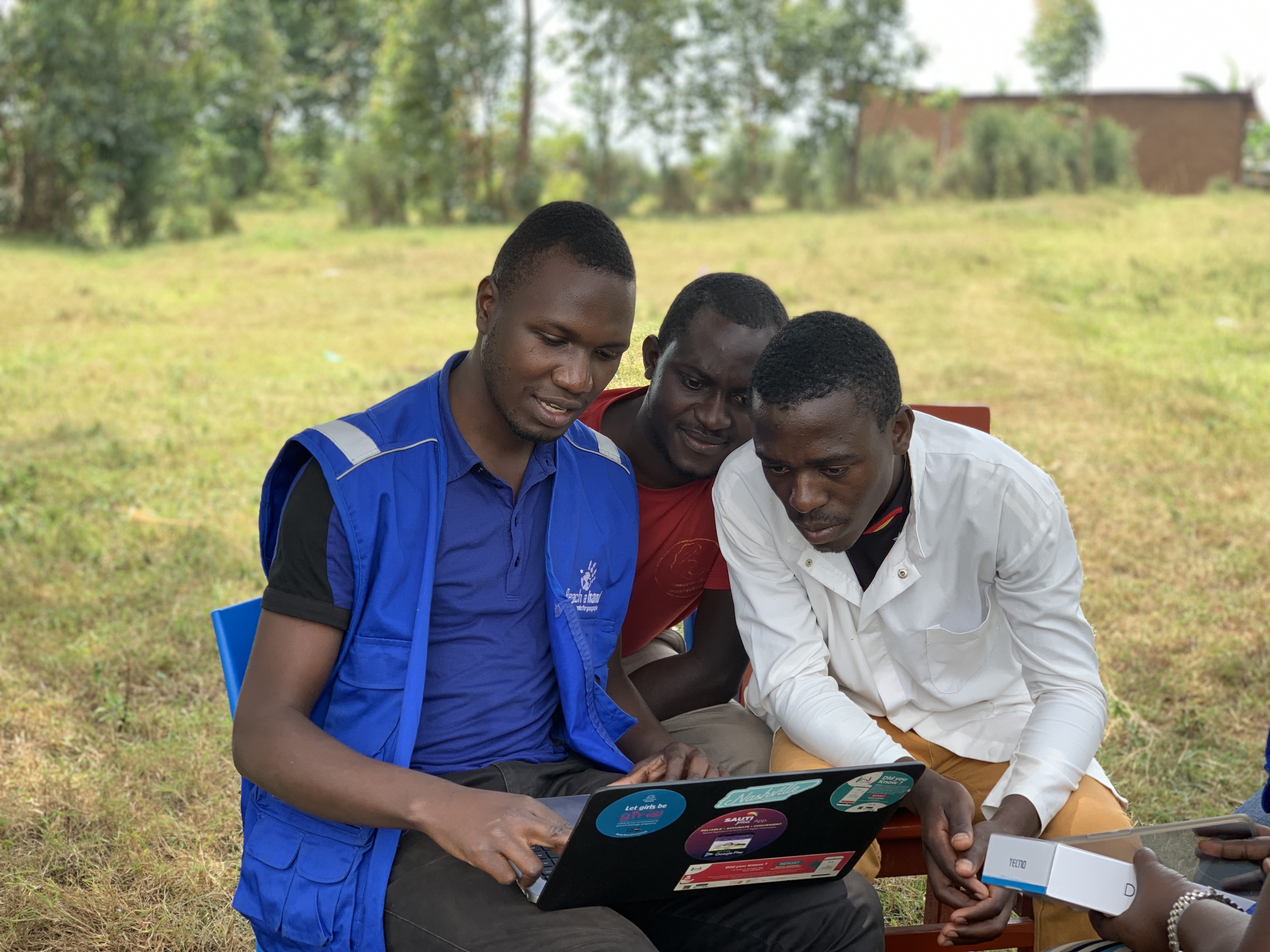
Next, Paul went over the Sauti system with the health workers. Once a patient has been referred, health workers can scan the patient card and all their info will load on the tablet. Health workers can also note prescriptions, medicine given, counseling, date for next appointment, and additional referrals to other health centers in the case that this one does not have the ability to treat or test for a specific case.
Location 2: Ngugo Health Center II
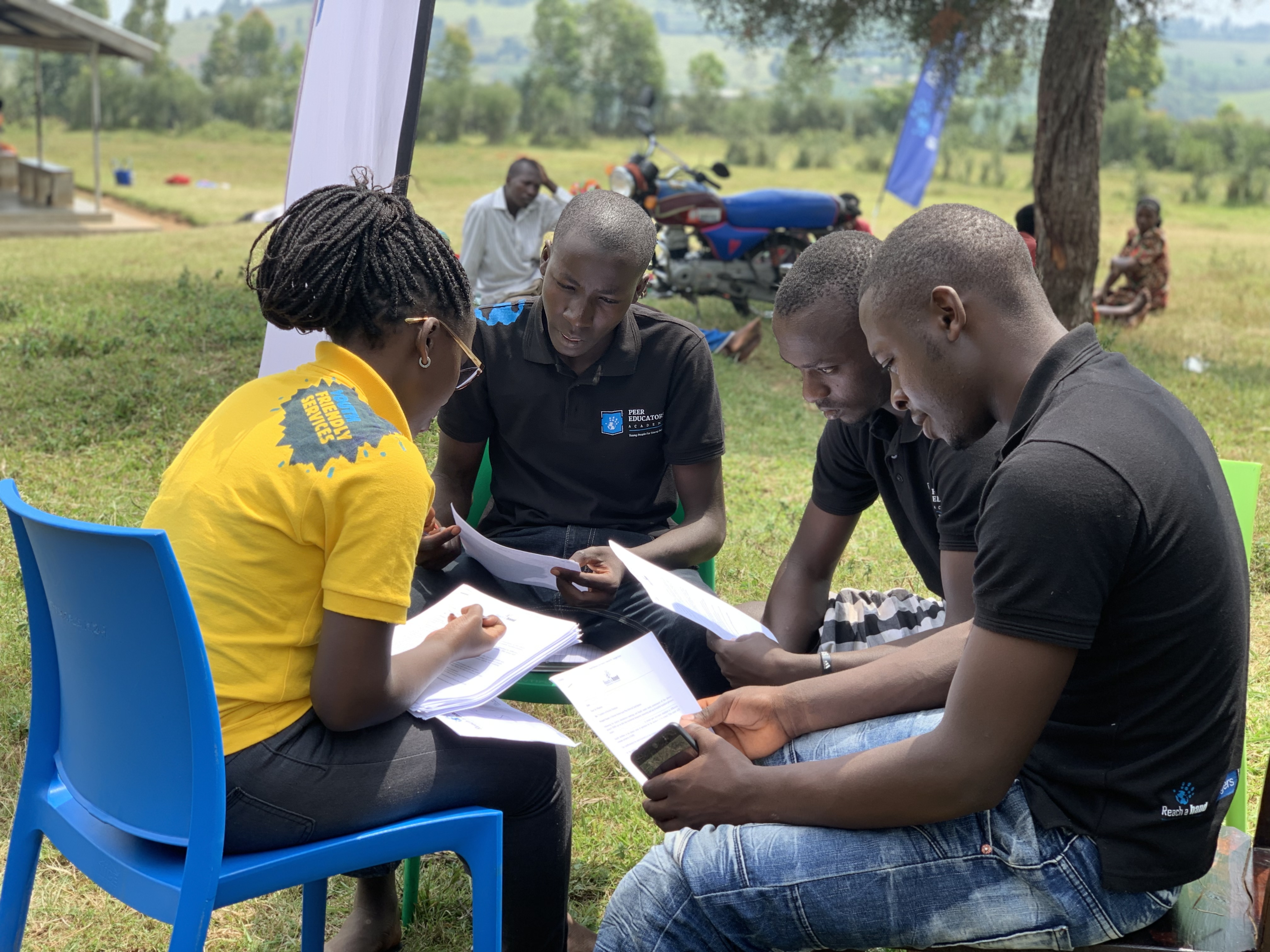
At this health center, there was one girl and four guys, 2 of whom were identical twins! They talked about their experiences educating their community on family planning methods, STI/STD prevention, youth-related subjects like menstruation and body changes after puberty, as well as steps of behavior.
They also mentioned that unfortunately, the government did not provide HIV testing in their health center, and they have to refer people to other places to get tested. They also mentioned visiting local parishes, going door to door and visiting a nearby primary school. A lot of their challenges were very simplistic, like complaining that their work shirt (provided by RAHU) does not always dry on time for work the next day. Some other challenges include:
- Need for more outreaches for young people since they don’t have transportation to the health center, which is also located on a mountain
- Need to move some services to the community since it’s also long distances for the peer educators to go on outreaches or door to door.
- Need for books for young people such as novels and fun things to read.
- Nurse complained that after peer educators teach they sometimes don’t have the items to offer (condoms tend to run short, lack of other methods, pads etc)
- Girls come to them after having unprotected sex and need emergency pills but they can’t offer it.
Finally, Hellen suggested they visit “Head Teachers 101”; a meeting for head teachers in an area where the peer educators can go talk about what they do and suggest they present it in their classrooms. This will help this motivated group of peer educators to extend their knowledge in the community. She also suggested they can choose to a skill to learn and Rahu can prepare for them to learn it, such as soap making!
 Rutgers Globemed GROW Trip 2019