July 15, 2019
From Rashmi and Lily’s perspective:
Since Mariam and Aayush left for Mbarara last night 😦 we woke up and went back to the Airtel station to visit our lovely friends again. There was another worker there and he was able to track down the problem. Lily got a new SIM card and her data was finally working!! After that was sorted out, we called an Uber to get to the office for our first day of work! The Uber driver was super nice, and was one of the first female drivers that we have seen so far. Once we reached the office, everyone was sitting in a meeting outside and it reminded us a lot of how E-board meetings are run at GlobeMed. Everyone was pretty much roasting each other (lol) but it was all constructive and everyone found it useful. Most of the issues that were mentioned were things like accountability, time management and most of all communication, especially between people that are on work field trips and people in the office.
We spent the rest of the day helping Herman organize cast and crew members for a new tv series, Kyaddala, which is still in the works. We also brain-stormed a few ideas for RAHU’s Inter-Generational Dialogue (IGD) for this year. It is pretty much a conference in which they invite various people from different communities and of all ages to discuss challenges that young people face in regards to Sexual Reproductive Health and Rights (SRHR), and more importantly, bridge the gap between right bearers (young people and women) and duty bearers (like different government officials and people in positions of authority). For example, the Ministry of Health of Uganda (http://health.go.ug/programs) is a great resource that we can use to make sure our message is spread effectively. This is RAHU’s fifth conference since starting them in 2014.
A few reasons why these IGD’s are so important is because they showcase the realities of young people that have lived SRHR experiences, and the potential consequences that follow as a result of lack of access to contraception, lack of sex education, and lack of acceptance around SRHR reform in general. We brainstormed ways to destigmatize prejudices around SRHR, link challenges together, and recognize how it contributes to larger public health issues. Additionally, these kinds of conversations contribute to the nation’s development and progress as a whole, especially since the youth are the ones who will be taking over as the next generation trying to implement change.
The conference will start off with an introduction/key-note speaker, then stem off into breakout sessions, and end with another speaker/presentation. We were thinking the theme for this year revolve around the topic of teen pregnancy since the pregnancy rate among teens is very high in Uganda (1 in 4). There are many different reasons for this, such as: not enough contraceptive education being taught in schools (or reproductive health in general), child marriages in rural areas, and lack of access to contraceptive and reproductive health resources.
After work it took a pretty long time to get home because of how much traffic accumulates in the area, and by the time we got home, we were too tired to make anything for dinner. So instead, we had a whole pineapple which we had picked up on a supermarket run a few days earlier. It was really good and sooo sweet.
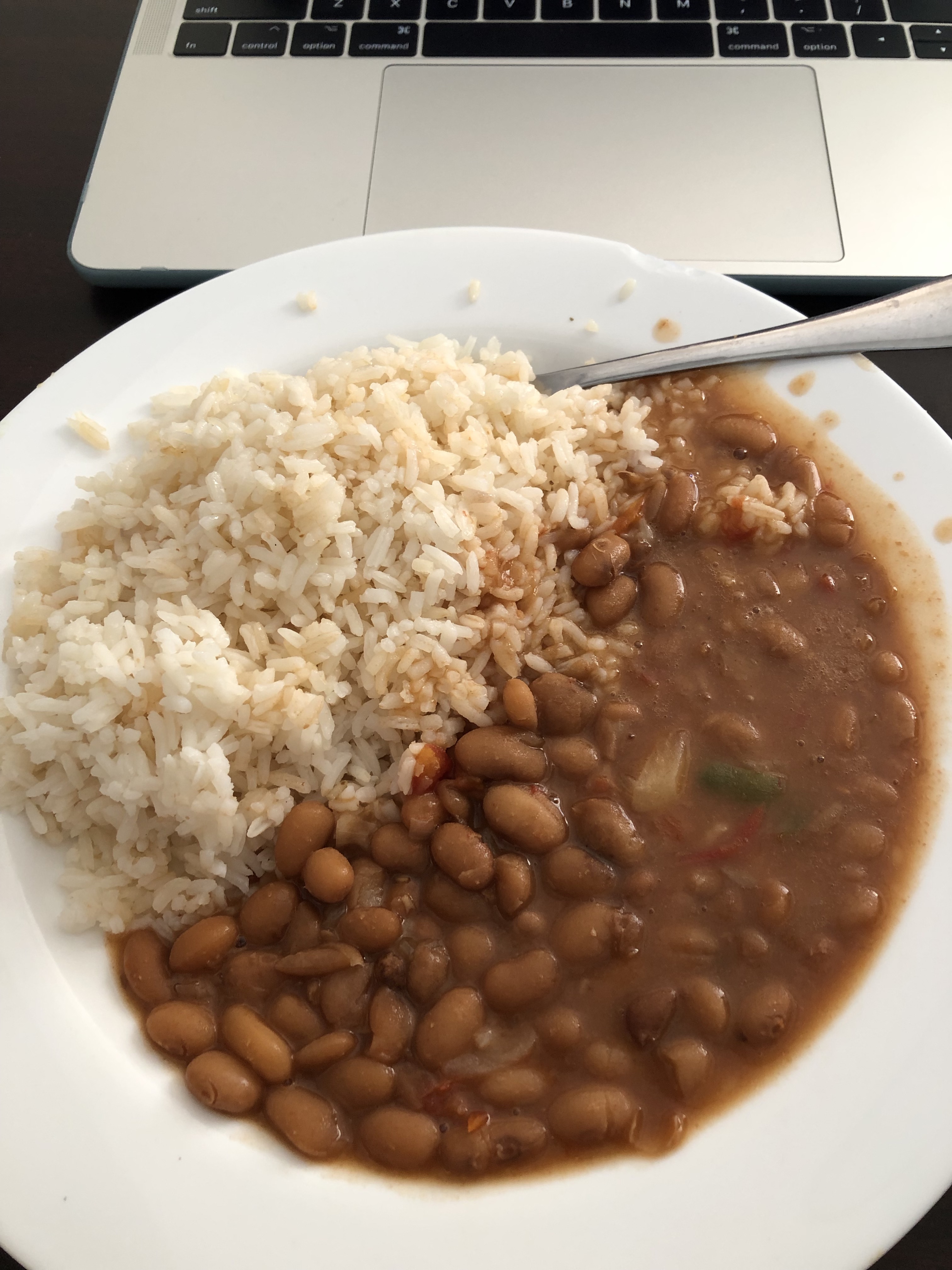
Also, special shoutout to Joyce for making an amazing lunch at the office!!! Rice, beans and some matooke.
From Aayush and Mariam’s perspective: Mbarara, Day 1
Kikoni health center.
Health centers in Uganda are categorized as levels 1, 2, 3 or 4 depending on the amount of services offered. The Kikoni health center was a level 3 health center, offering services such as family planning, maternal health and a youth corner created and supported by RAHU. This health center is also the biggest one after the direct regional hospital. This is where RAHU’s peer educators come in; RAHU trains the peer educators in the peer educator academy around January. Once their training is done, the peer educators are sent out to the community to help refer young people to the health centers to get tested, screened, checked up and to get any medication they may need. Through the SautiPLUS program, peer educators reach out to community members who might need a referral to a health center and provide them with a card. This card, once registered, can be scanned and the patient’s information is recorded. This card helps solve two challenges that a young person in the community faces that can prevent them from going to the health center. The first thing is that instead of manually entering all of their information, like name, height, weight, address, date of birth etc., scanning the card would automatically enter this information in the health clinic’s records. The other challenge this solves is the lack of anonymity in healthcare and lack of confidentiality between patients and some health care workers. By bypassing all of the employees up to the doctor themselves, a patient doesn’t have to worry about a clinic secretary, for example, telling their parent that they came to the clinic for STD testing. This card should encourage young people to visit the health center more often as it makes the process simpler and safer for them.
Today we were meeting with the Peer Educators of this specific area to catch up on their progress and introduce new recruits to the system. They followed up as to why people are still not visiting the health centers and taking appropriate action to provide needed services and re-training the peer educators as needed.
The Peer Educators meeting began with an agenda: Prayer, individual updates, reactions, new business. Because this was the first time in 3 months that RAHU staff from Kampala met with peer educators, there was a lot to discuss and catch up on. Based on the individual updates, some challenges faced specifically in the Mbarara region were as follows:
- Rainy season makes it hard to work
- Medicine is limited
- Tool kits/prayer sheets limited
- Want more outreach
- Lack of attendance at youth corners by peer educators
- Lack of communication from health center to health center/individual teams
Some of the improvements/advice based on this information is as follows:
- Use the games as a tactic to bring children to the clinic (30 mins of informative talk and 30 minutes of volleyball/board games)
Each of the RAHU staff members from Kampala also gave their updates and offered advice/criticism so the Peer Educators of Mbarara District know how to improve. Helen gave the following feedback:
- Use games as a tactic to bring children from OPD (outpatient department) into the clinic; while they are here, convince them to attend a service.
- Part of the peer educators’ job is to provide scenarios and have the students think about a possible solution.
- Scenario 1: What if a father beat a mother while she was pregnant: what would you do? Scenario 2: If a married woman hugs in-laws, is that wrong? In Kampala, YES, but in Mbarara, NO, so not all scenarios work here. Helen suggested making more scenarios based on these examples
- The clinic should have a number of condoms available for those who request them, however the condom box is currently empty. There needs to be better communication between the peer educators and RAHU staff so they know to request more from the Department of Health. Furthermore, Helen urged educators to provide a condom demonstration instead of blindly handing them out.
- In the case that tool kits are limited, educational health talks can also be done. This can occur in the form of showing students how to properly wash hands or even talk about the negative side effects of drunk driving.
Paul, the Innovations Analyst, introduced the updated Card System as described above and led the demonstration on each Peer Educators’ new smartphone. This was a really important step in the plan to streamline clinic visits as the peer educators are the ones referring patients to this clinic. Furthermore, most of these educators have never used a smartphone before so ensuring they are comfortable with the functions of the phone and SautiPlus app were crucial.
Some of the challenges with Peer Educators based on RAHU staff’s end is as follows:
- Regularly forget email accounts/passwords
- Have to travel long distances to visit the Mbarara District health clinic every week (there is about 1 PE per region around Mbarara so many have to arrange their own transportation)


 Rutgers Globemed GROW Trip 2019